
Knowledge SuperBox
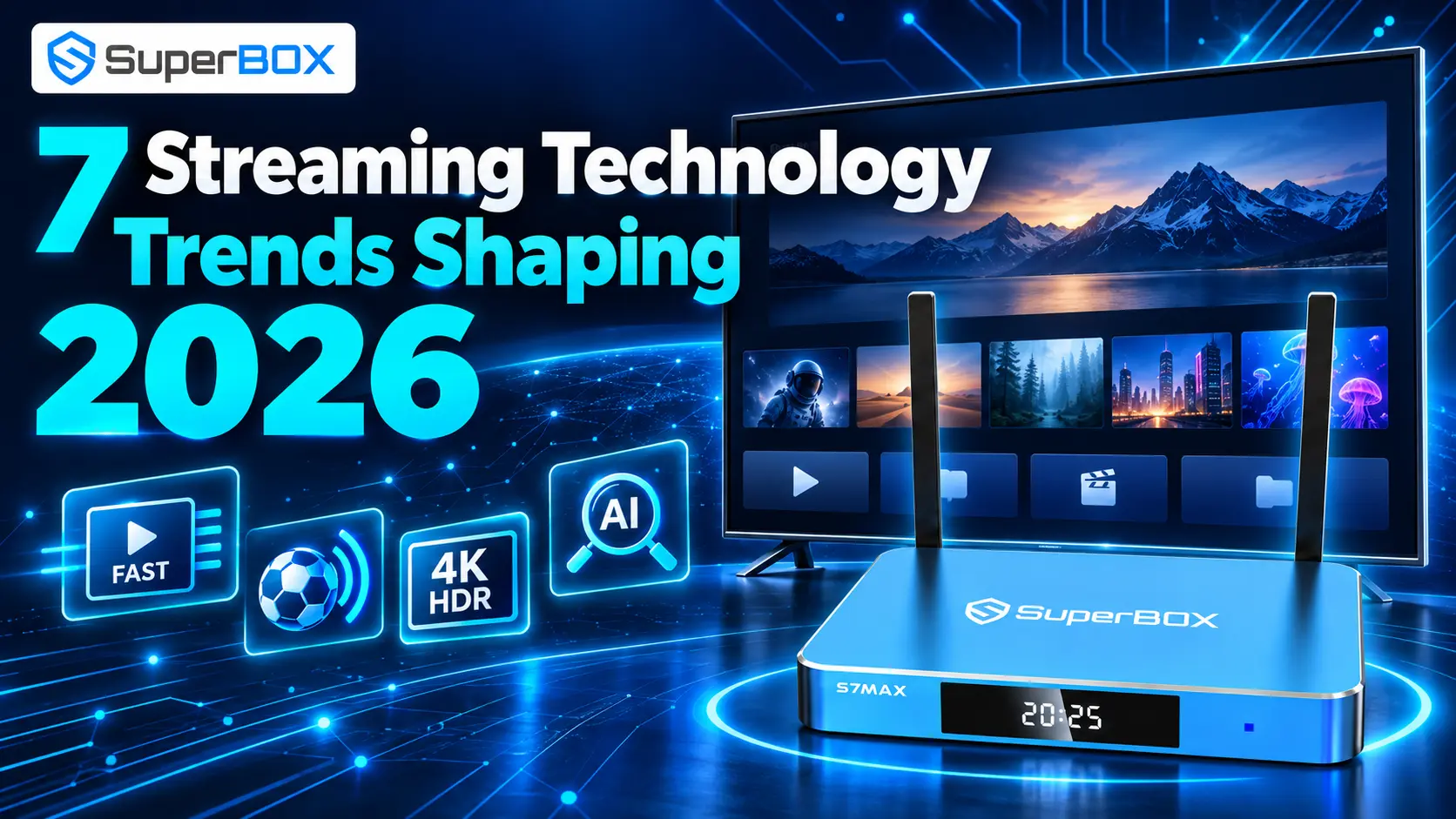
Top Streaming Technology Trends Shaping Home Viewing in 2026





The home entertainment landscape is undergoing a fundamental technological shift as viewer frustration with fragmented streaming platforms, rising subscription costs, and inconsistent broadcast quality drives widespread demand for smarter hardware solutions. Modern consumers no longer accept constant buffering, low-bitrate compression, or restrictive closed television operating systems that lock them into expensive monthly subscriptions.
Emerging wireless protocols, cutting-edge video decoding standards, and intelligent cloud distribution networks are reshaping how media is delivered to the living room.
Quick Check: The dominant streaming technology trends in 2026 include widespread adoption of the AV1 compression codec for pristine 4K video, ultra-low latency Wi-Fi 6 wireless networking, artificial intelligence voice search, and multi-viewing quad-screen sports streaming. Hardware like the SuperBox S8 series leads this technological evolution by combining advanced hardware decoding with automated 7-Day Cloud Playback and zero monthly subscription fees.
Technical Breakdown of the Major Streaming Breakthroughs
| Technology Domain | 2026 Modern Standard | Legacy Predecessor Standard | Real-World Benefit for Viewers |
|---|---|---|---|
| Video Compression Codec | AV1 and Advanced H.265 (HEVC) | H.264 (AVC) | 30% to 50% bandwidth reduction with superior color depth and zero macroblocking |
| Local Wireless Protocol | Wi-Fi 6 (802.11ax) Dual-Band | Wi-Fi 5 (802.11ac) | OFDMA and MU-MIMO eliminate buffering caused by crowded home smart networks |
| Sports Broadcast Display | Quad-Screen Native Multi-Viewing | Single Feed Viewing | Simultaneous monitoring of four live sports broadcasts on one large screen |
| Broadcast Catch-Up System | 7-Day Automated Cloud Playback | Manual Local DVR Timers | Server-side archiving allows instant rewinding of games without storage drives |
| Content Discovery Interface | AI Contextual Voice Processing | Basic Keyword Search | Natural voice commands find actors, live teams, and channels within seconds |
| Hardware Enclosure Design | Aerospace-Grade Aluminum Alloy | Thin Molded ABS Plastic | Passive metal heatsinks prevent thermal throttling during continuous 4K playback |
Detailed Analysis of the Core Streaming Technology Trends
1. Hardware Accelerated AV1 and Advanced H.265 Video Compression
Video streaming consumes substantial global internet bandwidth, prompting broadcasters to transition away from aging H.264 video compression. The open-source AV1 codec and refined H.265 High Efficiency Video Coding represent the modern foundation of ultra-high-definition streaming.
These advanced codecs compress raw high-definition video data up to fifty percent more efficiently than older algorithms without sacrificing fine image detail, contrast, or dynamic range. For viewers, this efficiency means that a pristine 4K video stream requires only fifteen to twenty megabits per second of internet bandwidth instead of thirty-five megabits, drastically reducing stuttering on standard home connections.
2. Wi-Fi 6 Wireless Infrastructure and Gigabit Ethernet Throughput
As modern households add dozens of connected smartphones, smart speakers, and security cameras, traditional wireless routers suffer from packet congestion. The widespread integration of Wi-Fi 6 (802.11ax) across flagship TV boxes resolves this bottleneck through Orthogonal Frequency-Division Multiple Access (OFDMA).
Wi-Fi 6 enables routers to communicate with multiple client devices concurrently rather than queuing transmissions sequentially. For premium streaming consoles like the SuperBox S8 series, Wi-Fi 6 provides rock-solid wireless stability even when other family members stream games or download files on the same network. For purists demanding zero packet jitter, integrated 1000Mbps Gigabit Ethernet ports guarantee maximum transmission stability.
3. Multi-Viewing Quad-Screen Technology for Live Sports Enthusiasts
For decades, live sports fans were forced to toggle back and forth between television channels to follow simultaneous games during busy weekend tournaments. The arrival of native Multi-Viewing capabilities has revolutionized sports consumption by splitting a single 4K television display into four synchronized, high-definition quadrants.
On high-end consoles like the SuperBox S8 Max and SuperBox S8 Ultra, users can watch four college football matchups, regional soccer games, or golf leaderboards simultaneously. Viewers can effortlessly switch active audio streams between quadrants using the remote control d-pad, ensuring they never miss critical plays or breaking announcements.
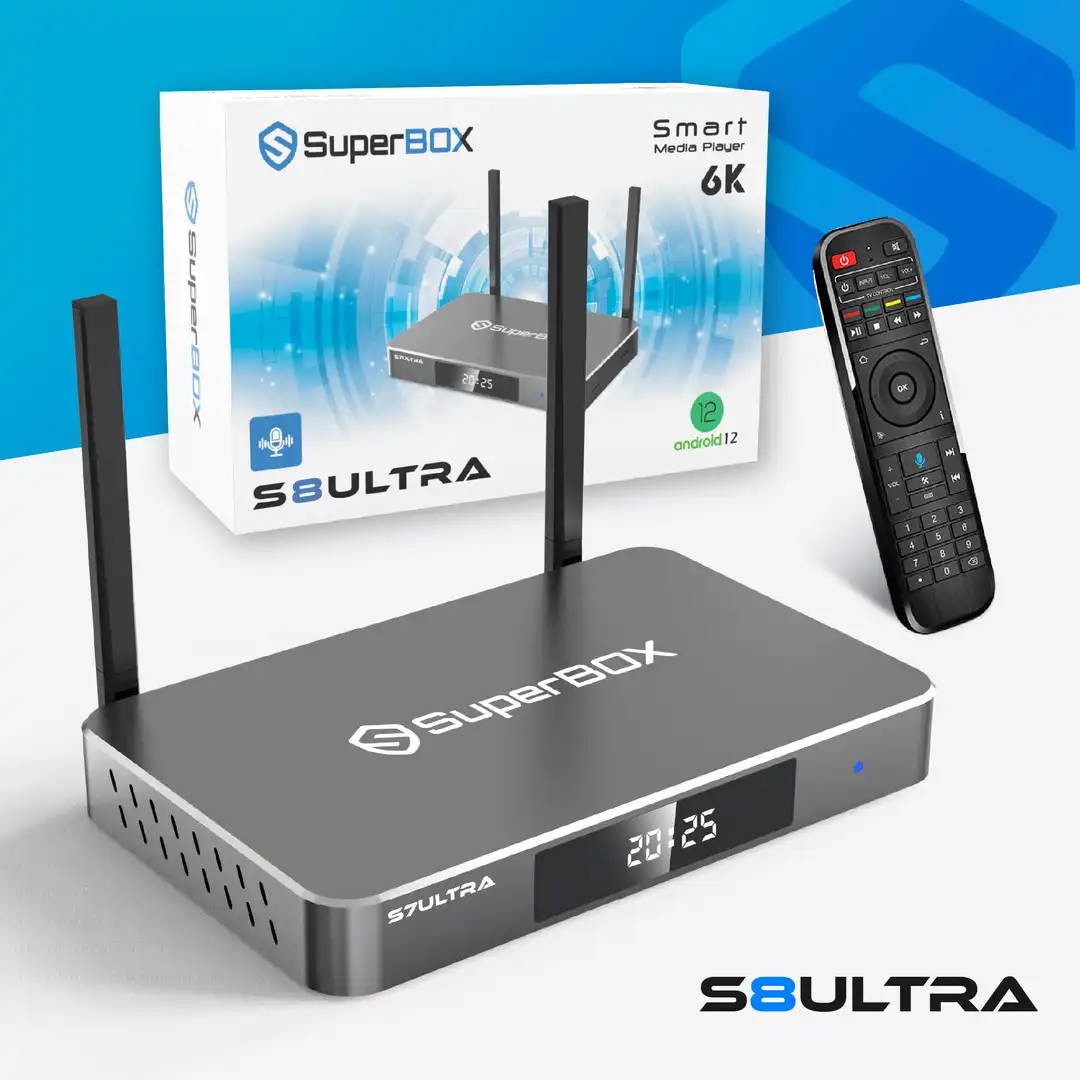 Cinema Flagship
The ultimate 2026 flagship media player. Engineered with 128GB high-speed storage, 4GB RAM, Gigabit Ethernet, Quad-Screen Multi-Viewing, and the exclusive RC-200L Backlit Voice Remote with zero monthly subscription fees.
4. Automated Cloud Playback and Time-Shift Archiving
Traditional digital video recorders required consumers to manually schedule recording timers, manage limited hard drive capacities, and troubleshoot corrupted local storage drives. Modern streaming systems have relocated recording infrastructure directly to distributed cloud server farms.
The SuperBox 7-Day Cloud Playback architecture automatically records prominent live broadcast channels for up to 7 days on supported channels. Viewers can navigate backward through seven full days of programming to replay missed football games, award ceremonies, or prime-time series with zero setup, zero local drive wear, and zero scheduled timer conflicts.
5. Natural Language AI Voice Command Processing
Navigating vast media directories containing thousands of live stations and tens of thousands of video-on-demand films using traditional virtual on-screen keyboards is tedious and slow. Modern streaming consoles integrate artificial intelligence voice processing engines directly into Bluetooth remotes.
Rather than typing letter by letter, users press a dedicated microphone button and speak natural queries such as “Find action movies starring Tom Cruise” or “Switch to ESPN live.” The voice engine parses the request, filters metadata libraries across multiple applications, and displays accurate search results in less than two seconds.

6. Thermal Architecture and Aluminum Heatsink Engineering
Continuous 4K HDR playback pushes mobile system-on-chip processors to high operating temperatures. Inexpensive plastic streaming sticks frequently suffer from thermal throttling, causing sudden frame drops, severe video stuttering, and random device reboots after an hour of viewing.
The latest trend in premium media consoles is the transition to all-metal aerospace-grade aluminum chassis. The metal shell functions as an expansive passive heatsink, drawing internal thermal energy away from the central processor and dissipating it through the outer casing to maintain cool, uninterrupted operation during marathon viewing sessions.
The Future Outlook for Independent Streaming Hardware
As media conglomerates continue fragmenting content behind proprietary paywalls and increasing subscription pricing, consumer hardware is shifting toward open, independent Android ecosystems. TV boxes that provide reliable cloud servers, lifetime maintenance, and uncompromised local hardware specs represent the definitive streaming solution for 2026 and beyond.
Frequently Asked Questions
What is the difference between AV1 and H.265 HEVC compression?
Both are advanced modern codecs, but AV1 is an open-source, royalty-free standard that delivers roughly twenty percent better compression efficiency than H.265, making it the preferred format for high-bitrate 4K and 8K streaming.
Does Wi-Fi 6 improve streaming if my internet speed is under 100Mbps?
Yes, Wi-Fi 6 improves local network efficiency and reduces wireless latency by managing multiple connected devices simultaneously, preventing local packet collisions even on moderate internet speed tiers.
Can all SuperBox S8 models stream four games at once?
Quad-Screen Multi-Viewing is supported natively on the SuperBox S8 Max and SuperBox S8 Ultra models, while the entry-level SuperBox S8 Pro supports dual-screen sports multi-viewing.
How does 7-Day Cloud Playback differ from a traditional DVR?
Traditional DVRs require internal or external hard drives and manual recording timers. 7-Day Cloud Playback records continuously to cloud servers, allowing instant rewinding of past broadcasts without using any local storage space.
Why do plastic streaming sticks get so hot while streaming 4K video?
Compact plastic dongles lack surface area and internal heatsinks to dissipate heat generated by continuous hardware decoding, causing them to overheat and throttle processing speeds.
What internet speed is recommended for 4K live sports streaming?
A dedicated download speed of twenty-five to thirty megabits per second is recommended for smooth, high-bitrate 4K video streams without buffering or resolution drops.
Does artificial intelligence voice search work without an active internet connection?
No, the voice recognition engine relies on cloud natural language processing servers to interpret speech and query real-time media databases accurately.
Are physical Ethernet cables still better than Wi-Fi 6 for TV boxes?
While Wi-Fi 6 provides exceptional wireless throughput, a direct wired Gigabit Ethernet connection eliminates all potential wireless interference and provides the lowest possible latency for live streaming.
Does the SuperBox S8 Ultra voice remote have illuminated buttons?
Yes, the flagship SuperBox S8 Ultra includes the exclusive RC-200L backlit voice remote, which illuminates buttons for effortless navigation in dark home theater rooms.
Will older HDMI 2.0 cables support 4K 60Hz streaming?
HDMI 2.0 cables support 4K resolution up to sixty frames per second with 8-bit color. For advanced HDR10+ and high-bandwidth multi-channel audio pass-through, using certified HDMI 2.1 cables is strongly recommended.
Final Thoughts
The home entertainment landscape continues to advance rapidly with hardware-accelerated 6K decoding, multi-view multitasking, and Wi-Fi 6 stability. Today’s viewers demand dedicated processing power that outperforms aging built-in smart TV interfaces.
Choosing modern standalone media hubs like the SuperBox S8 Ultra ensures seamless performance and long-term operating system support. Staying ahead of these technological trends guarantees the highest visual fidelity and uninterrupted streaming enjoyment.
The article was updated on:
